Answer: The best commercial signage in Arlington, VA combines visible storefront branding, strategic window graphics, cohesive interior signage, and flexible event graphics. The right mix depends on your location, foot traffic, building rules, permit requirements, and customer journey—from the first street-level impression to the first fifteen seconds inside your space.
Key Takeaways
- Storefront signs should prioritize visibility, code compliance, and brand recognition from the street or sidewalk.
- Window graphics are one of the fastest ways to promote services, privacy, seasonal campaigns, or tenant identity.
- Interior signage is often underused, but it shapes trust, wayfinding, and customer experience immediately.
- Arlington businesses should plan for permitting, landlord approvals, fabrication timelines, and installation access early.
Arlington businesses need signage that works before, during, and after the first visit
Commercial signage in Arlington, VA has to do more than identify a business. It must compete in dense mixed-use corridors, professional office buildings, retail centers, hospitality spaces, healthcare environments, apartment communities, and government-adjacent commercial zones.
A restaurant near Clarendon needs quick street recognition. A government contractor in Ballston may need polished lobby signage, privacy graphics, and conference room identifiers. A healthcare practice near Pentagon City may need clear wayfinding, ADA-compliant room signs, and reassurance-focused branding. A property management team may need consistent signage across multiple Arlington assets.
That is why the strongest sign programs are planned as systems—not one-off pieces.
District Visual Communications (DVC) helps Arlington-area businesses develop commercial signage that fits the space, brand, timeline, and operating needs. If you are planning retail signage, office graphics, property signage, or a multi-location rollout, start with a practical review of your location, audience, and sign types. Explore DVC’s [retail signage](https://districtvisual.com/retail-signage) capabilities for storefront, window, and customer-facing environments.
Storefront signage creates the first commercial impression
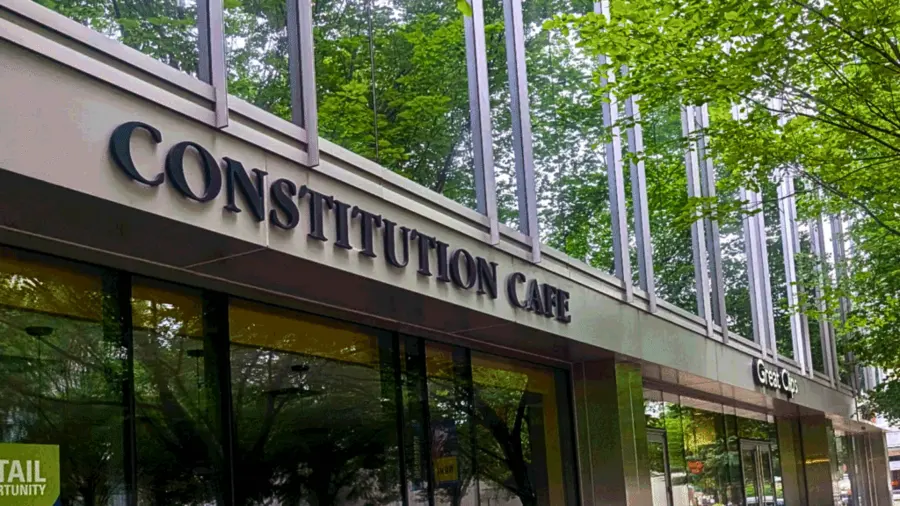
Storefront signage is usually the most visible investment a business makes. In Arlington, this may include channel letters, dimensional letters, blade signs, cabinet signs, illuminated signs, monument signs, or branded entry graphics.
Good storefront signage should answer three questions quickly:
- Who are you?
- What do you offer?
- Is this the right entrance?
For retail, restaurant, hospitality, and service businesses, storefront signs should be legible from common approach points: walking paths, parking areas, rideshare drop-offs, and nearby intersections. For professional offices, the priority may be a more refined architectural look using metal, acrylic, halo-lit letters, or glass-mounted graphics.
Typical storefront sign costs vary widely. Simple vinyl door lettering may be a few hundred dollars. Dimensional letters often range from $1,500 to $6,000+. Illuminated exterior signs can move higher depending on size, electrical requirements, access, and permitting.
In Arlington, exterior signs may require landlord approval, property management review, and county permitting. Starting early prevents a finished design from getting delayed by code, mounting, or electrical issues.
Window graphics turn underused glass into working brand space
Window graphics are practical, fast, and versatile. They can promote services, communicate hours, add privacy, support seasonal campaigns, or make a leased space feel established before permanent signage is installed.
Common options include:
- Cut vinyl lettering for doors and windows
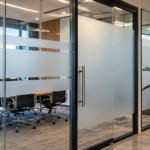
- Frosted privacy film for offices, clinics, and conference rooms
- Full-color promotional window graphics
- Perforated window film for outward-facing advertising
- Temporary graphics for events, openings, or leasing campaigns
For Arlington retail signage, window graphics are especially useful in walkable areas where customers make fast decisions from the sidewalk. For offices, medical practices, and government contractors, frosted glass and branded privacy graphics can make interiors feel more polished while supporting confidentiality.
Window graphics usually do not require the same level of permitting as larger exterior signs, but property rules still matter. Building managers may restrict coverage percentages, colors, placement, or installation methods.
Interior signage shapes confidence in the first fifteen seconds
Many businesses over-invest in the storefront and under-invest in what happens next. Once someone walks inside, the interior signage tells them whether the business is organized, credible, premium, approachable, or improvised.
Operator Insight from District Visual Communications (DVC):
Business owners often focus on getting customers through the door, but interior signage tells people what kind of business they just walked into. Before choosing signs, ask what you want someone to feel in the first fifteen seconds: confident, impressed, reassured, or welcomed. Cohesive interior signs, wall graphics, branded elements, and wayfinding continue the story after the storefront has done its job.
Interior signage can include:
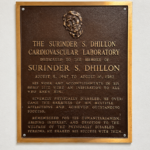
- Lobby signs and dimensional logos
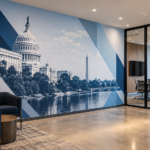
- Branded wall graphics
- Directional and wayfinding signs
- ADA-compliant room identification signs
- Elevator, floor, and suite signage
- Conference room and office signs
- Mission, culture, or donor walls
- Privacy graphics for glass interiors
This matters for corporate offices, healthcare facilities, schools, churches, hotels, apartment buildings, and commercial real estate properties. A cohesive interior system makes visitors feel expected, reduces confusion, and reinforces brand value.
For healthcare environments, interior systems may include privacy messaging, department identification, and clear navigation. DVC also supports [medical office signage](https://districtvisual.com/medical-office-signage) for practices that need professional, compliant, patient-friendly environments
Event graphics help Arlington businesses show up professionally off-site
Commercial signage is not limited to permanent buildings. Arlington companies often need event signage for conferences, trade shows, recruiting events, community activations, government contractor events, nonprofit functions, and hospitality promotions.
Useful event graphics include:
- Retractable banners
- Step-and-repeat backdrops
- Branded table throws
- Directional event signs
- Foam board or PVC displays
- Wall murals and temporary graphics
- Portable wayfinding signs
- Sponsor recognition signage
Event graphics should be designed for reuse when possible. A well-built banner stand or modular display can support multiple events if the message is not overly date-specific. For high-value events, quality materials matter because flimsy graphics can weaken an otherwise polished brand presence.
Sign type, cost, timeline, and permit needs should be compared before ordering
| Sign Type | Best Use | Typical Cost Range | Typical Timeline | Permit Usually Required? |
| Storefront dimensional letters | Retail, offices, restaurants, clinics | $1,500–$6,000+ | 2–6 weeks | Often, especially exterior |
| Illuminated exterior signs | High-visibility storefronts and evening traffic | $4,000–$15,000+ | 4–10 weeks | Yes, usually |
| Window graphics | Promotions, privacy, branding, hours | $300–$3,500 | 3 days–3 weeks | Usually no, but rules vary |
| Lobby signs | Offices, healthcare, property management | $1,000–$7,500 | 2–5 weeks | Usually no |
| ADA and wayfinding signs | Offices, schools, healthcare, apartments | $500–$10,000+ | 2–6 weeks | Sometimes, depending on scope |
| Event graphics | Conferences, openings, recruiting, activations | $250–$5,000+ | 2 days–3 weeks | No, unless installed publicly |
Costs depend on size, material, mounting conditions, illumination, design complexity, quantity, and installation access. Timelines can shorten when artwork is approved quickly, site conditions are straightforward, and permitting is not required.
The best Arlington sign programs follow a clear planning process
A strong commercial signage project should follow a practical sequence:
1. Survey the site. Review visibility, entrances, glass, interior flow, walls, code constraints, and installation access.
2. Define the customer journey. Identify what a visitor needs to see from the street, at the door, in the lobby, and throughout the space.
3. Choose materials by environment. Exterior signs need weather resistance; interior signs may prioritize finish, texture, and brand feel.
4. Confirm approvals early. Check landlord rules, property management requirements, and Arlington permitting needs before fabrication.
5. Design as a system. Match storefront, window, interior, and event graphics so the brand feels intentional.
6. Install with minimal disruption. Coordinate timing around business hours, tenants, patients, residents, or customer traffic.
For property teams managing apartments or mixed-use buildings, signage consistency is especially important across entrances, parking areas, amenity spaces, leasing offices, and resident wayfinding. DVC supports [signage for apartment buildings](https://districtvisual.com/signage-for-apartment-buildings) where durability, clarity, and brand consistency all matter.
District Visual brings a personalized, high-value approach to commercial signage
Arlington businesses have many sign vendor options, from franchise sign shops to traditional regional providers. District Visual Communications (DVC) is built for organizations that need responsive service, custom craftsmanship, quality materials, and a more personal account relationship.
That is especially valuable for complex or repeat signage needs: corporate offices, commercial real estate, government contractors, healthcare facilities, hospitality brands, schools, museums, transportation hubs, embassies, nonprofits, churches, construction firms, and multi-site rollouts.
The advantage is not just making a sign. It is solving the business problem: improving visibility, guiding people clearly, supporting compliance, protecting brand standards, and delivering on a timeline that respects the client’s operation.
Frequently Asked Questions
How much does commercial signage cost in Arlington, VA?
Commercial signage in Arlington can range from a few hundred dollars for basic vinyl graphics to $15,000+ for illuminated exterior signage. Most storefront, lobby, window, and wayfinding projects fall somewhere between $1,500 and $10,000 depending on size, materials, quantity, design complexity, permits, and installation conditions.
Do Arlington businesses need permits for commercial signs?
Exterior commercial signs often require permits, especially illuminated signs, wall-mounted signs, projecting signs, and larger storefront installations. Interior signs and window graphics may not require permits, but landlord or property management approval may still be necessary. The safest approach is to review code and building rules before fabrication.
What is the fastest type of commercial signage to produce?
Window graphics, door lettering, temporary event signs, and some interior graphics are usually the fastest to produce. Depending on design approval, material availability, and installation scheduling, these can often be completed in days to a few weeks. Illuminated and permitted exterior signs usually take longer.
What signage should a new Arlington office prioritize first?
A new Arlington office should prioritize exterior or suite identification, door graphics, lobby signage, ADA-required signs, and basic wayfinding. After those essentials are covered, branded wall graphics, conference room signs, privacy film, and culture walls can make the space feel more complete and professional.
Is interior signage really worth it for a customer-facing business?
Yes. Interior signage affects trust, navigation, and brand perception immediately after someone enters. A cohesive interior sign system can make customers feel reassured, help visitors find their way, and communicate that the business is established and detail-oriented—not assembled as an afterthought.
Next Step for District Visual Communications (DVC)
Request a consultation: hello@districtvisual.com.
Recent Posts