Answer: Businesses planning signage in Washington, DC should confirm local review requirements early, choose materials suited to the building and use case, budget for design, fabrication, permitting, and installation, and work with a sign partner experienced in DC’s commercial, government, historic, and institutional environments.
Key Takeaways
- DC signage often involves more than design and fabrication; permits, landlord rules, historic review, or agency approvals may affect the timeline.
- Exterior signs usually require more review than interior office, ADA, wayfinding, or lobby signage.
- The best sign type depends on visibility, compliance, brand standards, durability, and the visitor experience.
- A local signage partner can help avoid delays by identifying approval requirements before production begins.
Washington, DC signage projects start with location, approvals, and use case
Signage in Washington, DC is not one-size-fits-all. A storefront in a historic district, a corporate office near K Street, a museum installation, an embassy facility, a healthcare suite, and a construction site all have different needs—and often different approval paths.
Before choosing colors, materials, lighting, or scale, business owners should answer three practical questions:
1. What job must the sign perform? Visibility, wayfinding, ADA compliance, safety, branding, advertising, donor recognition, tenant identification, or visitor flow.
2. Where will the sign be installed? Interior, exterior, lobby, window, monument, wall, vehicle, or temporary site location.
3. Who must approve it? Landlord, property manager, DC permitting authority, historic review body, building engineer, or internal brand/compliance team.
That early planning matters in DC because the city includes federal buildings, embassies, historic neighborhoods, commercial corridors, mixed-use developments, transportation hubs, and highly managed office properties. The sign that works for one address may not be permitted—or practical—at another.
District Visual Communications (DVC) helps businesses, agencies, property teams, and institutions plan signage with a solutions-oriented approach: clear design direction, quality fabrication, fast turnaround, and personalized account management rather than a franchise-style handoff.
Need signage for a DC office, retail location, healthcare facility, apartment property, or institutional space? DVC can help plan, produce, and install commercial signage built for your site, brand, and approval requirements. Explore related solutions for retail signage, signage for apartment buildings, and medical office signage.
DC review requirements can shape your signage timeline
One of the most common mistakes businesses make is assuming signage can be designed, fabricated, and installed on a simple “order and hang” timeline. In Washington DC, the review process can be more layered.
Operator Insight from District Visual Communications:
“Take a look at which review body has authority over your address. DC has a ton of historic and otherwise specialized areas that have more layers of reviews. That’s not a reason to avoid doing business in those areas; rather, check out the authorizing body at the very beginning so that you know what the review process, requirements, and timeline will be.”
That advice is especially important for exterior signage, illuminated signs, projecting blade signs, awnings, monument signs, construction signage, and signs in historic or highly regulated districts.
Typical timeline expectations:
• Interior office signs, wall graphics, simple door vinyl: often 1–3 weeks depending on design and materials.
• ADA, wayfinding, and tenant signage packages: often 2–6 weeks depending on quantity, approvals, and installation conditions.
• Exterior signs, illuminated signs, blade signs, monument signs: often 4–10+ weeks depending on permitting, engineering, landlord review, and fabrication.
• Large institutional or multi-site signage programs: often phased over several weeks or months.
The fastest projects are usually the ones planned correctly from the start.
The right sign type depends on visibility, compliance, and environment
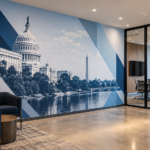
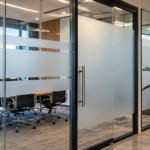
Washington, DC businesses use signage for more than storefront identification. A corporate headquarters may emphasize brand identity and functional signage through lobby signs, dimensional letters, privacy film, donor walls, and branded conference rooms. A hospital or clinic may prioritize directional and informative signage through ADA signage, healthcare digital signage, department wayfinding, and patient privacy notices. A school may focus on student culture and directional signage via campus wayfinding, digital signage for schools, safety signs, and room identification. A restaurant may need blade signs, menu boards, window graphics, and restaurant digital signage.
| Sign Type | Typical Use | Estimated Cost Range | Typical Timeline | Permit Usually Required? |
| Interior lobby sign | Corporate offices, associations, embassies, professional services | $750–$5,000+ | 1–4 weeks | Usually no |
| ADA and wayfinding signs | Offices, hospitals, schools, apartments, public facilities | $25–$250+ per sign | 2–6 weeks | Usually no, but compliance matters |
| Window graphics | Retail, restaurants, offices, leasing centers | $300–$3,500+ | 1–3 weeks | Sometimes, depending on coverage/rules |
| Retail storefront sign | Shops, restaurants, service businesses | $2,500–$15,000+ | 4–10+ weeks | Often yes |
| Blade or projecting sign | Walkable commercial corridors | $3,000–$12,000+ | 4–10+ weeks | Often yes |
| Construction signage | Developers, GCs, project sites | $500–$10,000+ | 1–4 weeks | Sometimes, depending on placement |
| Digital signage | Retail, schools, healthcare, hotels, offices | $1,500–$20,000+ | 2–8 weeks | Sometimes, based on installation |
| Monument or exterior site sign | Campuses, offices, churches, property entrances | $5,000–$30,000+ | 6–12+ weeks | Often yes |
These ranges vary based on size, lighting, mounting conditions, materials, engineering, access equipment, quantity, and complexity.
Material choices affect durability, appearance, and brand perception
Good signage in Washington, DC has to look professional and survive real-world conditions: humidity, sun exposure, winter weather, foot traffic, cleaning protocols, and building restrictions.
Common material choices include:
• Acrylic: clean, polished, common for lobby signs, dimensional letters, and office branding.
• Aluminum composite material: durable and versatile for exterior panels, construction signage, and property signs.
• Vinyl graphics: efficient for windows, walls, doors, privacy film, and temporary campaigns.
• Dimensional letters: strong visual impact for corporate offices, retail signage, and reception areas.
• Illuminated cabinets or channel letters: high visibility for storefronts, restaurants, hotels, and retail.
• Digital displays: useful for retail digital signage, hotel digital signage, healthcare digital signage, and schools that need frequently updated messaging.
DVC brings a modern, industrial-chic design sensibility to projects that need to feel current, polished, and durable—not generic or overly traditional. That is especially valuable for commercial real estate, hospitality, architecture and design teams, government contractors, and corporate interiors where signage becomes part of the built environment.
A strong signage process prevents expensive rework
The best results come from aligning design, compliance, fabrication, and installation before production begins. A practical DC signage process should include:
1. Site review: Confirm location, dimensions, surfaces, visibility, access, power, and installation conditions.
2. Approval mapping: Identify landlord, property management, historic, permit, or agency review requirements.
3. Design development: Match the sign to brand standards, architecture, materials, and viewing distance.
4. Budget confirmation: Account for design, fabrication, permitting, installation, equipment, and potential revisions.
5. Production: Fabricate using materials appropriate for the environment and expected lifespan.
6. Installation planning: Coordinate building access, insurance, safety requirements, after-hours work, and final placement.
For large repeat accounts—such as property managers, government contractors, healthcare groups, restaurant groups, schools, churches, and real estate developers—this process also creates consistency across locations.
Washington, DC businesses benefit from local signage expertise
The DC signage market is large and competitive, with demand from government facilities, airports and transportation hubs, museums, embassies, nonprofits, hotels, restaurants, retail corridors, commercial real estate, and corporate offices. The broader U.S. printed signage market is projected in the billions, and DC’s mix of 168+ embassies, dense office space, cultural institutions, and small business employment makes local execution especially important.
A national franchise may be convenient for simple one-off signs. But complex, high-value signage projects often require deeper coordination: custom craftsmanship, responsive communication, site-specific planning, and a team that understands how DC buildings actually operate.
That is where District Visual Communications is built to perform: fast service delivery, operational efficiency, personalized client relationships, and specialized expertise for commercial, institutional, and corporate signage programs.
Frequently Asked Questions
Do I need a permit for signage in Washington DC?
Many exterior signs in Washington, DC require permits or formal review, especially illuminated signs, projecting signs, awnings, monument signs, and signs in historic or specially regulated areas. Interior signs usually do not require the same permitting, but ADA, fire, building, and property rules may still apply.
How long does it take to get a business sign made in DC?
Simple interior signs or vinyl graphics may take 1–3 weeks. Larger ADA packages, wayfinding systems, storefront signs, illuminated signs, or exterior signage can take 4–10+ weeks, especially if landlord review, permitting, historic review, engineering, or specialty materials are involved.
What type of signage works best for a Washington, DC storefront?
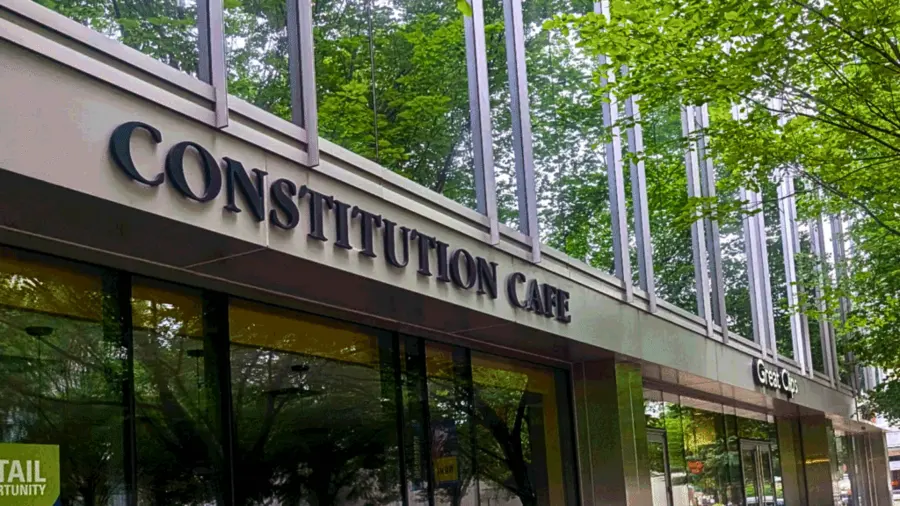
The best storefront signage depends on the building, visibility needs, landlord rules, and local review requirements. Common options include dimensional letters, blade signs, illuminated signs, window graphics, awnings, and door lettering. In walkable DC corridors, blade signs and clear window graphics can be especially useful for pedestrian visibility.
How much does commercial signage cost in Washington, DC?
Commercial signage can range from a few hundred dollars for simple window graphics to $15,000 or more for custom exterior signs, illuminated signage, or complex architectural signage packages. Cost depends on size, materials, lighting, installation access, permitting, and design complexity.
Can one sign company handle design, fabrication, and installation?
Yes. Working with one experienced sign partner for design, fabrication, permitting guidance, and installation can reduce delays and miscommunication. This is especially helpful for DC businesses managing multiple approvals, tight opening dates, corporate brand standards, or complex site conditions.
Next Step for District Visual Communications
Recent Posts