When do digital signs make sense instead of traditional signs? Digital signs make sense when your message changes often, your location depends on timely communication, or your audience needs real-time information. Traditional signs are better for permanent branding, wayfinding, compliance, and architectural identity where the message rarely changes.
Digital signs are strongest when the message changes often
The biggest mistake businesses make with digital signs is treating them as a premium version of a static sign. They are not simply “better signs.” They are communication tools.
A traditional sign works well when the message is stable: your company name, building identification, suite number, directional arrows, ADA room signs, monument signage, or branded lobby signage. A digital sign works best when the message changes often enough to justify the added cost, infrastructure, and management.
That includes:
• Retail digital signage for weekly or bi-weekly promotions
• Restaurant digital signage for menu changes, specials, and limited-time offers
• Hotel digital signage for events, meeting rooms, guest information, and wayfinding
• Healthcare digital signage for department updates, visitor guidance, and patient flow
• Digital signage for schools, campuses, churches, and community facilities
• Transportation, government, and municipal alerts
• Commercial real estate tenant messaging and property announcements
For a Bethesda, Washington DC, or Northern Virginia business, the practical question is not “Can we afford digital?” It is “How much money, staff time, and delay do we lose when the message cannot be updated quickly?”
Operator insight from the District Visual Communications team:
Many business owners assume the decision comes down to cost: digital signs are expensive and static signs are cheaper. But the more important variable is how often the message needs to change. If your message is permanent, digital may not add value. If you run bi-weekly promotions, you can lose time and money every time static signs need to be redesigned, printed, and installed.
If your organization needs both permanent branding and changeable messaging, District Visual Communications can help plan the right mix of architectural signs, printed graphics, and digital displays. Explore our retail signage capabilities or contact the DVC team for a signage plan built around your location, timeline, and permitting requirements.
Traditional signs still deliver the best value for permanent branding
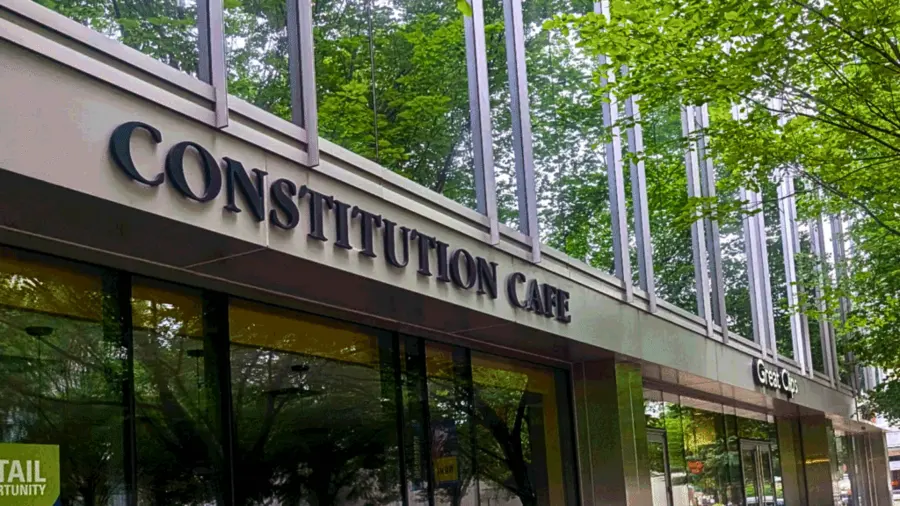
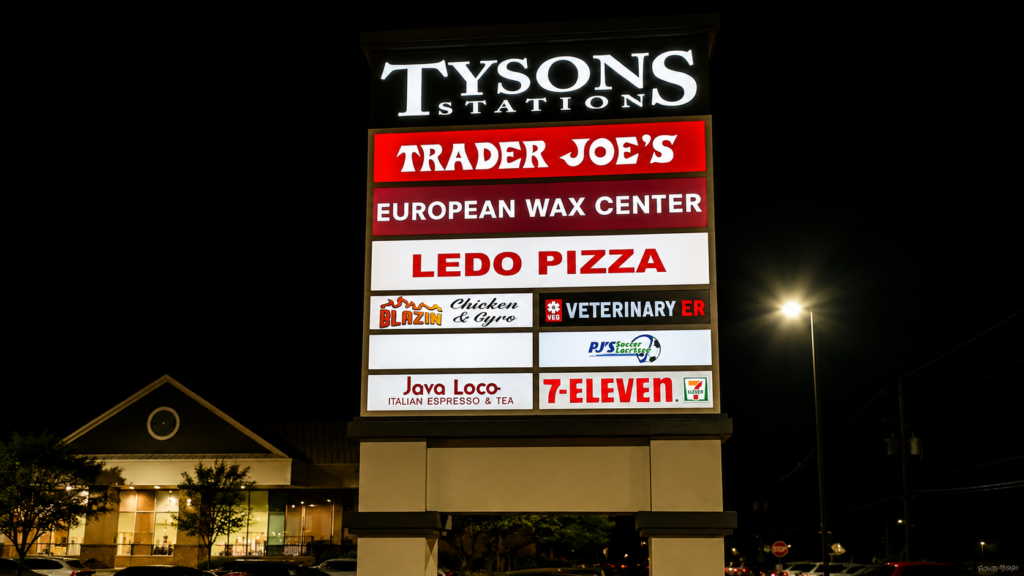
Traditional signage remains the right choice for many commercial, institutional, and government environments. A dimensional lobby sign, monument sign, ADA-compliant wayfinding system, wall graphic, blade sign, or exterior building sign can support your brand for years with minimal upkeep.
Traditional signs are especially effective for:
• Corporate office identification
• Government facilities and agencies
• Embassies and international organizations
• Medical office signage and healthcare wayfinding
• Apartment and property management signage
• Construction signage and site compliance
• Church signage and nonprofit facility identification
• Retail signage where the core brand message stays consistent
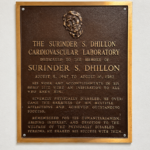
For example, a medical building may need permanent department signs, ADA room identifiers, directional signage, and privacy notices. A digital screen may help with announcements, but the essential navigation system should still be durable, compliant, and easy to read. For healthcare environments, see DVC’s work with medical office signage.
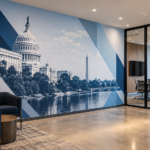
Traditional signs also allow more control over materials, finishes, fabrication quality, and architectural fit. This matters in DC-area spaces where the visual standard is high: embassies, museums, commercial real estate lobbies, government contractors, hotels, and Class A office buildings. A modern industrial-chic sign package can feel more intentional than a generic screen mounted to a wall.
LED message boards require planning beyond the screen itself
An LED message board can be powerful, but it is not a plug-and-play decision. The screen is only one part of the project.
A well-planned digital sign project should account for:
1. Viewing distance — A roadside LED sign needs different resolution and brightness than an indoor lobby display.
2. Content frequency — Someone must update the sign, approve messages, and maintain brand standards.
3. Electrical requirements — Outdoor digital signs often require dedicated power and coordination with licensed electrical professionals.
4. Permitting — Jurisdictions may regulate brightness, animation, location, size, and operating hours.
5. Mounting conditions — Brick, glass, concrete, storefront systems, and monument bases each require different installation methods.
6. Long-term maintenance — Digital signs may require software access, parts replacement, service calls, and content troubleshooting.
In Bethesda, Washington DC, Arlington, Alexandria, and surrounding jurisdictions, permitting expectations can vary significantly. Some exterior digital signs or LED message boards may require zoning review, landlord approval, electrical permits, or historic district considerations. Timelines can also change if the sign is visible from a roadway or installed on a multi-tenant property.
This is where a solutions-oriented sign partner matters. District Visual Communications works with commercial clients, property teams, contractors, and institutional buyers that need more than a one-off sign order. Complex projects often require coordination between branding, fabrication, site conditions, installation timing, and compliance documentation.
Cost, timeline, and permitting differ sharply by sign type
Digital signs usually cost more upfront than traditional signs, but the better comparison is total use case value. If a static sign must be replaced repeatedly, digital may become more efficient over time. If the message is permanent, static signage is usually the better investment.
| Sign Type | Best Use | Typical Cost Range | Typical Timeline | Permit Requirements |
| Printed banners or temporary signs | Events, construction signage, short-term promotions | $150–$1,500+ | Few days to 2 weeks | Usually minimal, but varies by location and duration |
| Wall graphics and window graphics | Retail signage, office branding, privacy, promotions | $500–$5,000+ | 1–3 weeks | Often low, unless exterior or regulated storefront use |
| Dimensional letters or lobby signs | Permanent branding, corporate offices, medical offices | $1,500–$10,000+ | 2–6 weeks | Interior signs often limited; exterior signs may require review |
| Monument or exterior building signs | Property identification, campuses, commercial real estate | $5,000–$50,000+ | 4–12+ weeks | Commonly required; zoning, landlord, and electrical review may apply |
| Indoor digital displays | Menus, announcements, directories, hotel signage | $1,000–$15,000+ | 2–6 weeks | Usually limited, unless structural/electrical work is involved |
| Outdoor LED message boards | Promotions, public alerts, schools, churches, municipal messaging | $15,000–$100,000+ | 8–16+ weeks | Often significant; zoning, brightness, animation, electrical, and site review may apply |
Costs vary based on size, materials, brightness, installation conditions, access equipment, permitting, content management, and electrical scope. A simple indoor screen for restaurant digital signage is a very different project from a freestanding LED monument sign for a school, church, municipal facility, or commercial property.
The smartest sign programs combine static identity with digital flexibility
The best signage strategy is rarely all-digital or all-static. Most commercial spaces need a layered system.
A strong mixed signage program might include:
• A permanent exterior sign for brand recognition
• ADA and wayfinding signs for compliance and navigation
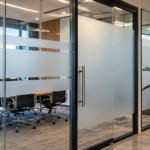
• Window graphics for seasonal messaging or privacy
• Digital lobby displays for announcements and directories
• LED message boards for high-frequency exterior updates
• Temporary construction signage for site communication and safety
This approach is especially useful for property management teams, schools, hospitals, hotels, restaurants, government contractors, and retail locations with recurring updates. For apartment communities and multi-site properties, permanent identity and wayfinding still do the heavy lifting, while digital signs can support leasing, events, alerts, or resident communication. Learn more about DVC’s work with signage for apartment buildings.
District Visual Communications is built for these higher-value, repeat-account environments. Instead of a franchise-style transaction, clients get personalized account management, practical recommendations, fast turnaround, and custom craftsmanship suited to complex commercial and institutional projects.
Local buyers ask these digital sign questions
Are digital signs worth it for a small business?
Digital signs are worth it when your message changes frequently enough to save time, printing costs, or missed opportunities. A restaurant with rotating specials, a retailer with frequent promotions, or a school with daily announcements may benefit. A business with one permanent message may be better served by a high-quality traditional sign.
Do LED message boards require permits in Bethesda or Washington DC?
Many exterior LED message boards require some level of permit review, especially if they are illuminated, freestanding, animated, visible from a roadway, or installed on a commercial property. Requirements can involve zoning, brightness limits, electrical work, landlord approval, or historic district review depending on the location.
What is better for healthcare facilities: digital signage or traditional hospital signage?
Healthcare facilities usually need both. Traditional hospital signage is essential for ADA compliance, room identification, wayfinding, privacy notices, and permanent department navigation. Digital signage for healthcare is useful for announcements, visitor guidance, wait-time messaging, directories, and temporary operational updates.
How long does a digital sign project usually take?
Indoor digital displays may take a few weeks if the site is straightforward. Outdoor LED signs and message boards often take 8 to 16 weeks or longer because of design, fabrication, permitting, electrical coordination, and installation logistics. Projects in dense DC-area locations may take longer if access, landlord approvals, or municipal reviews are involved.
Can digital signs replace retail signage completely?
Usually, no. Retail digital signage is excellent for promotions, menus, featured products, and timely offers, but permanent retail signage still establishes brand presence from the street, storefront, lobby, or sales floor. The strongest retail environments use static signs for identity and digital signs for flexible selling messages.
Next Step for District Visual Communications
Recent Posts