Custom wall graphics work best when the design, material, wall surface, paint condition, and installation timing are planned together. For DC offices, agencies, embassies, healthcare spaces, and commercial buildings, the right wall graphic system can reinforce brand identity, improve navigation, activate blank walls, and support a polished workplace experience.
Custom wall graphics turn office walls into branded, functional space
Custom wall graphics give businesses a way to make interior space more intentional without rebuilding the environment. In Washington, DC, that matters. Offices, government facilities, associations, embassies, healthcare providers, commercial real estate teams, and hospitality spaces often need interiors that communicate credibility immediately.
A blank wall can become:
• A branded reception feature
• A mission statement or values wall
• A timeline or history display
• A department identification wall
• A donor, partner, or sponsor recognition area
• A wayfinding support element
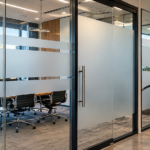
• A privacy or visual separation feature
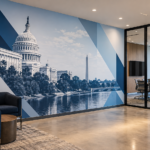
• A large-format mural for employee or visitor experience
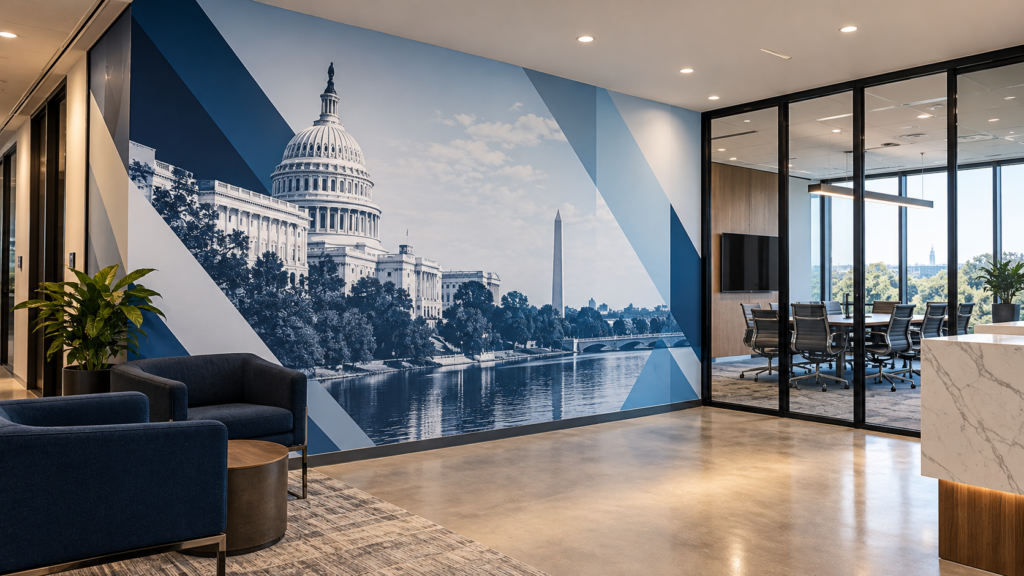
For corporate offices and government contractors, wall graphics can make leased office space feel more permanent and professional. For museums, cultural institutions, schools, and embassies, they can support storytelling. For property managers and real estate developers, they can improve lobbies, amenity spaces, leasing offices, and shared corridors.
District Visual Communications works with organizations that need more than a one-off print. Many office wall graphic projects involve brand standards, multiple stakeholders, installation windows, security requirements, and high-visibility environments where details matter.
The wall itself determines whether the graphic performs
The most common mistake in office wall graphics is focusing only on the design file. The graphic may look perfect on screen, but the wall determines whether it installs cleanly and holds over time.
A practical operator insight from District Visual Communications: clients often focus on the design, but the surface underneath the graphic is what decides long-term success. The wall texture, paint finish, and how recently the wall was painted or treated can all affect adhesion. If graphics are installed on freshly painted walls too early, they may fail to adhere properly or damage the wall during removal.
Before production, evaluate:
1. Paint age — Fresh paint needs proper cure time before graphics are applied.
2. Paint type — Low-VOC, stain-resistant, or specialty paints can create adhesion challenges.
3. Wall texture — Smooth drywall accepts graphics differently than textured, brick, concrete, or block surfaces.
4. Moisture and humidity — Interior walls near entrances, kitchens, restrooms, or exterior walls may need closer review.
5. Previous repairs — Patches, skim coats, dust, or uneven finishes can telegraph through the graphic.
6. Removal expectations — Temporary campaigns and permanent branding require different materials and adhesives.
This is where a solutions-oriented sign partner matters. A fast, efficient project should still begin with the right diagnostic steps.
Planning office graphics for a DC workplace, lobby, healthcare facility, or commercial property? District Visual Communications can help evaluate wall conditions, recommend materials, and produce custom wall graphics that fit the space, brand, and installation timeline. For related interior branding needs, see medical office signage and signage for apartment buildings.
The right material depends on surface, lifespan, and finish
Not all custom wall graphics are the same. The best material depends on where the graphic will be installed, how long it needs to last, and how the space is used.
| Wall Graphic Option | Best Use | Planning Consideration |
| Printed vinyl wall graphics | Logos, murals, brand walls, office graphics | Requires compatible paint and clean, smooth surface |
| Removable wall vinyl | Short-term campaigns, leased offices, temporary branding | Easier removal, but not ideal for every wall finish |
| High-tack vinyl | Light texture, more difficult wall surfaces | Stronger adhesive may affect removal |
| Dimensional lettering | Reception areas, conference rooms, premium brand moments | Adds depth and permanence |
| Wall murals | Large feature walls, storytelling, workplace culture | Requires careful scaling, panel alignment, and installation planning |
| Frosted or privacy film on glass | Conference rooms, sidelights, interior glass | Better for glass than drywall; useful with office wall graphics |
For retail environments, wall graphics often pair with retail signage, point-of-purchase displays, window graphics, and branded interior elements. For offices, the priority is usually brand clarity, visitor confidence, and professional finish.
Strong design planning prevents expensive rework
Office wall graphics should not be treated as enlarged flyers. Large-format wall design has its own rules.
A design that works well on a brochure may fail on a 12-foot wall if the text is too small, the contrast is weak, or important content lands behind furniture. Good planning accounts for how people actually move through the space.
Use this checklist before approving artwork:
• Is the main message visible from the natural viewing distance?
• Will furniture, monitors, doors, or plants block key content?
• Does the graphic align with architectural features?
• Are brand colors adjusted for wall lighting and print output?
• Are photos high enough resolution for large-format printing?
• Is there enough margin around corners, outlets, thermostats, and trim?
• Does the design need to be removable later?
• Will the graphic support visitors, employees, or both?
In Washington, DC, many organizations also need graphics that feel polished without being loud. A modern industrial-chic aesthetic can work especially well in commercial offices, creative spaces, developer showrooms, and renovated buildings where exposed materials, clean typography, and high-contrast branding fit the environment.
Installation planning protects the finished result
Professional installation is what turns a good print into a finished branded environment. For complex or high-value projects, installation planning should happen before production begins.
A typical custom wall graphics process includes:
1. Discovery and site review — Confirm goals, wall locations, surfaces, measurements, and installation constraints.
2. Material recommendation — Match vinyl, laminate, adhesive, or dimensional material to the wall and expected lifespan.
3. Design adaptation — Scale artwork to the actual wall and adjust for architectural details.
4. Proofing and approval — Review dimensions, placement, colors, and content before production.
5. Production — Print, cut, laminate, or fabricate the graphic elements.
6. Installation scheduling — Coordinate access, security, elevators, work hours, and occupied office conditions.
7. Final inspection — Check alignment, adhesion, seams, edges, and overall finish.
DC projects may involve secure buildings, government facilities, embassies, airports, transportation hubs, commercial real estate properties, healthcare facilities, and active office environments. That makes coordination important. The goal is not just to print quickly; it is to install cleanly with minimal disruption.
District Visual Communications’ advantage is its balance of rapid service delivery and personalized account management. Clients get the efficiency needed for fast-moving timelines without being pushed through an impersonal franchise process.
Custom wall graphics are strongest when tied to a larger signage strategy
The best wall graphics do not stand alone. They support the rest of the environment.
In an office, wall graphics may work with lobby signage, ADA signs, room identification, directional signs, privacy film, and digital displays. In a healthcare facility, they may support calm navigation and patient confidence. In a hotel or hospitality space, they may reinforce guest experience. In a school, church, nonprofit, or municipal facility, they may communicate mission and help people understand where to go.
For large repeat accounts, consistency is critical. A multi-site organization should define standards for colors, materials, logo placement, typography, and replacement expectations. That keeps every location aligned while still allowing each space to feel local and intentional.
FAQ: Custom wall graphics for Washington, DC businesses
How long do custom wall graphics last?
Custom wall graphics can last for several years when the right material is matched to the wall surface and environment. Longevity depends on paint type, wall texture, cleaning practices, sunlight exposure, humidity, and whether the graphic is in a high-touch area.
Can wall graphics be removed without damaging paint?
Many wall graphics can be removed cleanly, but removal depends on the adhesive, paint quality, paint age, surface preparation, and how long the graphic has been installed. Fresh paint, poorly bonded paint, or aggressive adhesives can increase the risk of damage.
What is the best surface for custom wall graphics?
Interior office wall graphics usually do not require the same permitting as exterior building signs. However, rules can vary by property, lease agreement, building management, security protocols, or historic property requirements. Always confirm with the property manager before installation.
What is the best surface for custom wall graphics?
Smooth, clean, fully cured painted drywall is typically the best surface for vinyl wall graphics. Textured walls, brick, concrete, low-VOC paint, and specialty coatings may require different materials, additional testing, or an alternate solution.
When should wall graphics be planned during an office buildout or renovation?
Wall graphics should be planned before final paint and furniture placement whenever possible. Early planning helps coordinate wall preparation, brand placement, electrical or architectural obstructions, installation access, and final design scale.
Next Step for District Visual Communications
Recent Posts